Can You Put a Dumpster on the Street? Permit Rules Explained (Saginaw)
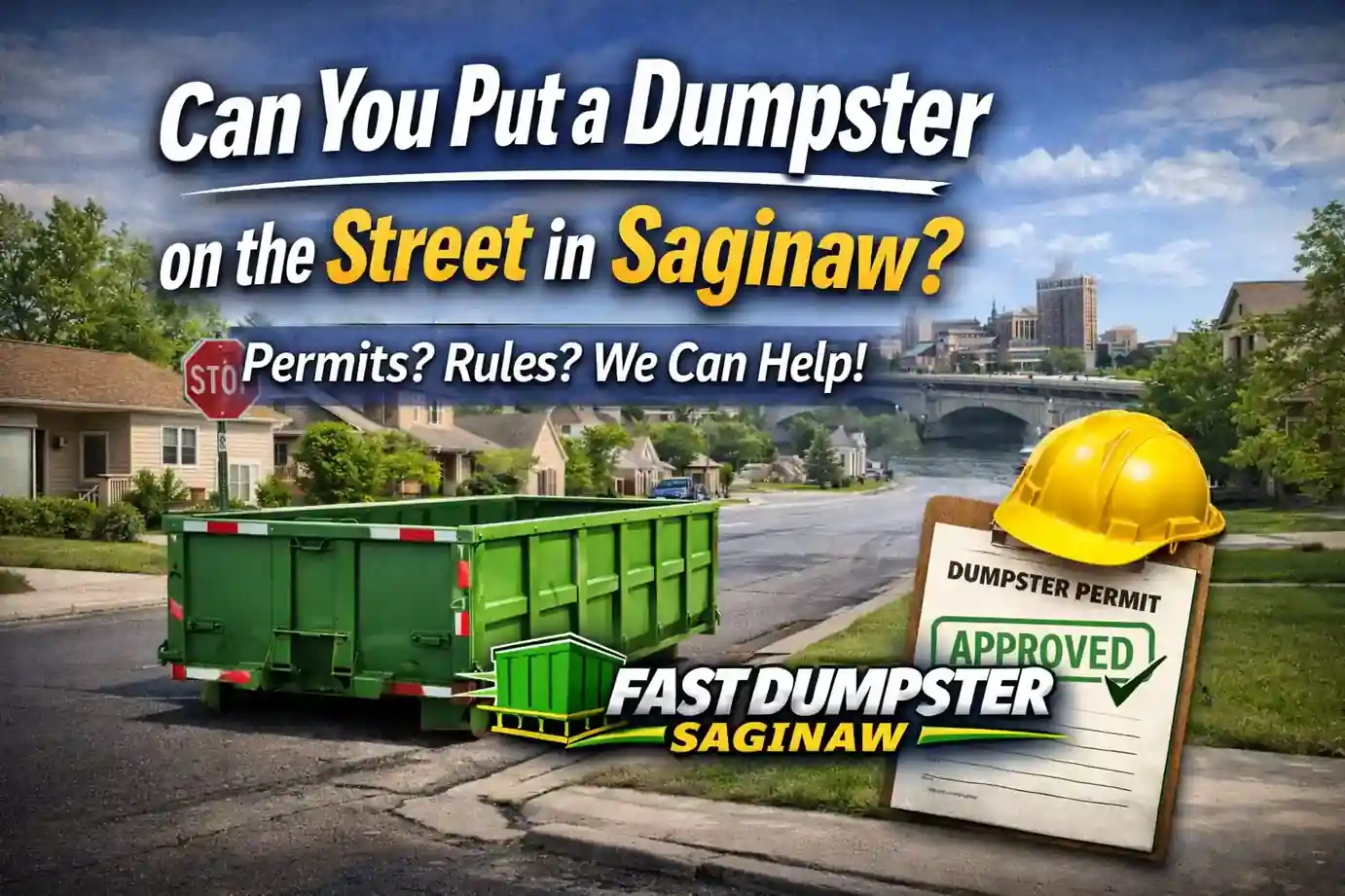
Planning a cleanup or renovation project often sounds simple at first. Then reality hits. The driveway is too small, the yard is already full, and suddenly you’re asking the big question: Can you put a dumpster on the street?
Often, the answer is yes. But there are a few important rules you need to know before scheduling delivery. From permits to placement guidelines, understanding the basics upfront can save you time, money, and stress.
Let’s break it all down in plain language so you know exactly what’s allowed, when a permit is required, and how to avoid common mistakes along the way.
Can You Put a Dumpster on the Street?
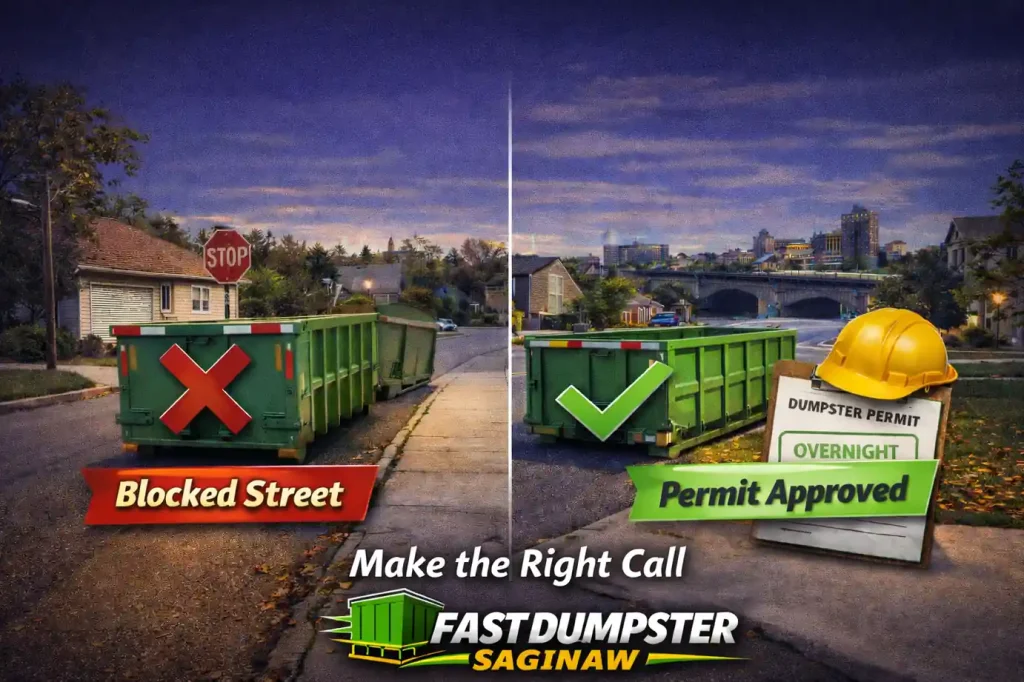
Let’s start with the simple version before getting into details.
| Placement Location | Allowed | Permit Required |
| Private driveway | Yes | No |
| Public street | Yes | Yes |
| Sidewalk or curb | Sometimes | Yes |
| Blocking traffic | No | Not allowed |
In most situations, any dumpster placed on a public street requires city approval.
Now, here’s what that actually means in real life. Cities consider streets, curbs, and sidewalks public space, even if they are right in front of your home. Because of that, they want to make sure dumpsters do not block traffic, interfere with pedestrians, or create safety risks.
If your dumpster fits entirely on your driveway, things are usually simple and permit-free. But once it touches the street or curb, local rules come into play. That is when a permit is typically required, even for short-term use.
The good news is that permits are usually easy to get when the placement is temporary and does not cause safety issues. Taking a few minutes to confirm local rules can help you avoid fines, delays, or having the dumpster removed unexpectedly.
When Is It Allowed to Put a Dumpster on the Street?
Before assuming street placement is fine, it helps to understand when cities usually approve it.
Street placement is commonly allowed when:
- There is no space on private property
- The driveway cannot support a dumpster
- The project produces a large amount of debris
- Temporary placement does not block traffic or sidewalks
Public Street vs. Private Property
This distinction matters more than many people realize.
- Private property, such as driveways and private lots, usually does not require permits.
- Public streets and sidewalks are controlled by the city and require approval.
Do You Need a Permit to Put a Dumpster on the Street?
This is where most people get caught off guard.
In most cities, including Saginaw, you do need a permit to place a dumpster on the street. Many homeowners assume short-term placement is fine, but even a one-day delivery can require approval if the dumpster sits on public property.
Why Cities Require Dumpster Permits
Permits exist for practical reasons, not just paperwork. Cities use them to:
- Keep roads safe for drivers and reduce traffic hazards
- Maintain clear access for pedestrians, strollers, and wheelchairs
- Protect pavement, curbs, and underground utilities from damage
- Ensure fire trucks, ambulances, and service vehicles can pass
- Prevent dumpsters from blocking driveways or intersections
- Control how long dumpsters remain in public areas
These rules help keep neighborhoods safe, accessible, and organized.
Who Issues Dumpster Permits?
Depending on the city, dumpster permits are usually issued by:
- City Hall, which handles general permits
- Public Works Department, responsible for streets and infrastructure
- Transportation or Engineering Department, especially for busy roads
In some cases, applications can be completed online, while others require a quick phone call or in-person visit.
Taking the time to check with the right office before delivery can save you from fines, delays, or having the dumpster removed unexpectedly.
How to Get a Dumpster Permit?
Getting a dumpster permit might sound complicated at first, but in most cases it is a simple process. Once you know what information the city needs, the application can usually be completed quickly without delays.
Taking a few minutes to prepare ahead of time helps ensure your dumpster is delivered on schedule and placed legally.
What You Will Need
Before applying, it helps to gather a few basic details. Most cities ask for:
Size of the dumpster
Exact placement location
Rental start and end Dates
Homeowner or Contractor
Having this information ready makes the approval process much smoother.
Typical Costs and Timing
While permit rules vary by city, most follow similar guidelines. Here is a general idea of what to expect when applying for a dumpster permit:
| Item | Typical Range |
|---|---|
| Permit fee | 25 to 100 dollars |
| Approval time | Same day to 3 business days |
| Allowed duration | 3 to 7 days |
In many cases, permits are approved quickly as long as the dumpster does not block traffic or sidewalks. If your project runs longer than expected, you may be able to request an extension.
How Long Can a Dumpster Stay on the Street?
Time limits vary, but cities usually follow similar guidelines. Most permits allow dumpsters to stay on the street for:
- A few days for small projects
- Up to one week for renovations
- Longer periods with approved extensions
If your project runs longer than expected, you may need to renew the permit.
Dumpster Placement Rules You Must Follow
Once your permit is approved, it is easy to assume the hard part is over. However, getting a permit does not mean you can place the dumpster anywhere you want. Cities continue to enforce placement rules to ensure safety, accessibility, and efficient traffic flow.
These rules apply even when the permit is valid, and failure to comply can result in fines or forced removal.
Most cities require:
- Reflective tape or markings so the dumpster is visible at night
- Clear access to sidewalks and driveways at all times
- A safe distance from fire hydrants and street intersections
- No blocking of traffic lanes or emergency routes
Failing to follow placement rules can result in penalties even if you already have a permit, so it is important to confirm placement details before delivery.
What Happens If You Put a Dumpster on the Street Without a Permit?
It might seem like a small risk, especially if the dumpster is only there for a short time. However, skipping the permit can lead to problems faster than most people expect. Cities actively monitor public streets, and unapproved dumpsters are often flagged quickly.
When a dumpster is placed on the street without a permit, possible consequences include:
City fines
Forced dumpster removal
Towing and storage fees
Liability for accidents or property damage
In many cases, the homeowner is held responsible, not the rental company. That is why confirming permit requirements before delivery is always the safer option.
Can a Dumpster Rental Company Handle the Permit for You?
This depends on the company and the type of project.
Some rental companies handle permits for:
Commercial projects
Contractor jobs
Long-term rentals
Homeowners are often responsible for giving permits for:
Residential cleanouts
Short-term rentals
City-specific requirements
Always confirm this before delivery day.
Alternatives If Street Placement Is Not Allowed
If street placement is not approved, you still have good options.
Common Alternatives
- Placing the dumpster in your driveway
- Using plywood to protect the surface
- Choosing a smaller dumpster size
- Using a junk removal service for small jobs
Frequently Asked Questions
Can You Put a Dumpster on the Street in Saginaw?
If you are still wondering, can you put a dumpster on the street, you are not alone. Permit rules and placement guidelines can be confusing, especially for first-time renters.
That is where Fast Dumpster Saginaw comes in. Our local team helps homeowners and contractors understand city requirements, select the appropriate dumpster size, and ensure compliance with local regulations.
When you need a roll-off dumpster rental service in Saginaw, we make the process simple with fast delivery, transparent pricing, and guidance on street placement permits.
📞 Call Fast Dumpster Saginaw today to check availability, pricing, and get clear answers about street placement and permits.